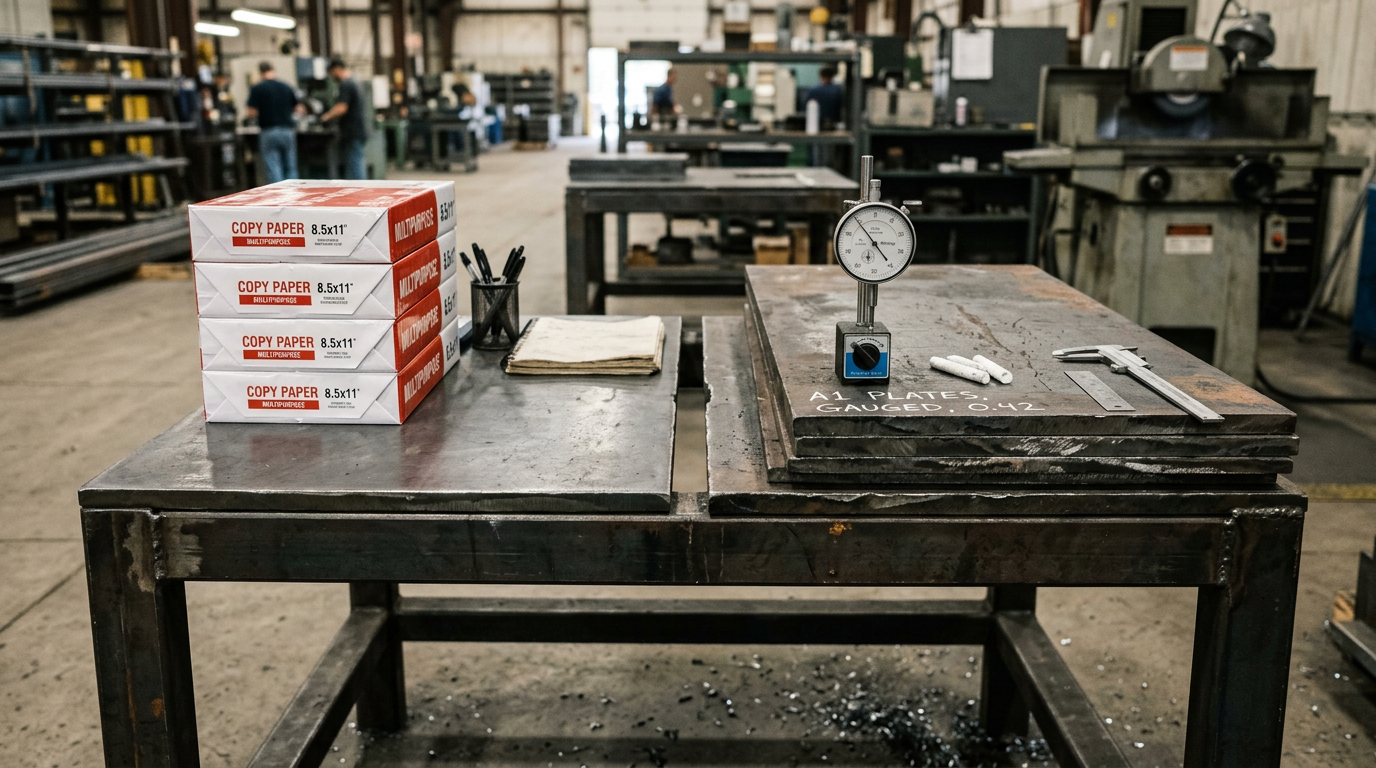
Core problem: many AI deployments inherit office-data assumptions even though factory data carries different operational and competitive consequences
Main promise: manufacturers need a stricter AI standard because factory data behaves like decision infrastructure, not ordinary business content
One of the quietest AI mistakes in manufacturing is also one of the most common: teams treat factory data like generic enterprise data. The spreadsheet looks familiar. The export feels “normal.” The chat box feels like every other productivity tool. But the content is not normal—not in what it implies, and not in what happens if it is mishandled.
Factory data is closer to operational leverage than to ordinary office information. It often encodes how the business actually runs: process logic, cycle behavior, downtime patterns, quality deviations, production assumptions, and improvement priorities. This is not merely descriptive information. It is applied operating knowledge—the kind that turns into decisions about schedules, releases, spend, and customer commitments when it is interpreted, summarized, or “helpfully” reorganized by a model.

The consequence is higher
If generic office data leaks or is mishandled, the impact may be contained. If factory data is exposed or misused, the impact can ripple through efficiency, margin logic, supplier position, operational stability, and competitive know-how. That changes how AI should be deployed around it. The question is not whether a model can ingest the file. The question is whether the organization is willing to run plant reality through a boundary it cannot explain under review.
Why generic AI patterns are risky here
Many generic AI workflows assume broad accessibility, light governance, and low-consequence experimentation. Those assumptions fit poorly in manufacturing, where even a prompt can carry material operational insight. The risk is not only malice or headline breaches. The risk is normalization: a tool that feels safe becomes the default path for sensitive context because it saves minutes on a Friday afternoon.
Factory data also needs context
The risk is not only exposure. It is misinterpretation. Industrial data without context can lead to shallow or misleading outputs because the signal is process-dependent, anomalies need operational interpretation, and trade-offs often sit outside the raw dataset. That is why manufacturing AI needs stronger domain fit—not to sound smarter, but to behave responsibly when the data is incomplete, noisy, or politically loaded inside the plant.
What better handling looks like
Manufacturers should treat factory data as a special class of AI input with stricter rules around access, storage, deployment, traceability, and human review. The question is not “can this data be uploaded?” The question is “should this data ever leave our intended control boundary—and if it does, under what contract, logging, and approval model?”
Operating discipline: classify inputs before tool selection; default to the higher boundary when uncertain; rehearse the approval path for outputs that influence execution.
If a vendor treats factory data like generic enterprise content, the buyer should be cautious. That often signals weak appreciation for industrial consequence, governance depth, and domain-specific reasoning.
DBR77 Vector is positioned around a safer industrial AI standard with private deployment options, no training on client data, industrial reasoning, and stronger human approval logic. That is more appropriate when the input is factory reality, not generic office content.
Factory data should never be treated like generic enterprise data because it carries operational logic, competitive value, and decision consequence. AI systems that touch it should reflect that responsibility—not as a slogan, but as architecture and operating rules you can inspect.
Plant checkpoint
Treat “Why Factory Data Should Never Be Treated Like Generic Enterprise Data” as a decision tool, not background reading. Before the next steering meeting, ask for one artifact that proves your posture—an architecture diagram, a training-policy excerpt, a log sample, a signed workflow classification, or a promotion record. If the room can only tell stories, you are still in pilot clothing. Manufacturing AI matures when evidence becomes routine: the same discipline you already expect before a line release, a supplier change, or a major IT cutover. That is the shift from excitement to infrastructure—and it is what keeps programs coherent across audits, turnover, and multi-site expansion.
If leadership wants one crisp decision habit, make it this: name what must be true before usage expands, then review whether it is true on a fixed cadence. That is how governance stops being a narrative comfort and becomes an operating metric your plants can execute.
DBR77 Vector gives manufacturers a safer way to use AI with factory data through private deployment options, stronger control, and no training on client data. Review security or Explore products using Vector.