
Core problem: teams ask for traceability but accept logs that cannot reconstruct a decision under stress, which fails audits and post-incident reviews
Main promise: manufacturers can specify traceability as a minimum record set linking inputs, model version, prompts, outputs, reviewers, and system actions
Traceability is not a checkbox labeled logging. It is the ability to reconstruct what happened, who saw it, and what changed as a result—under time pressure, with incomplete memory, and without relying on a vendor’s goodwill to “pull something together.”
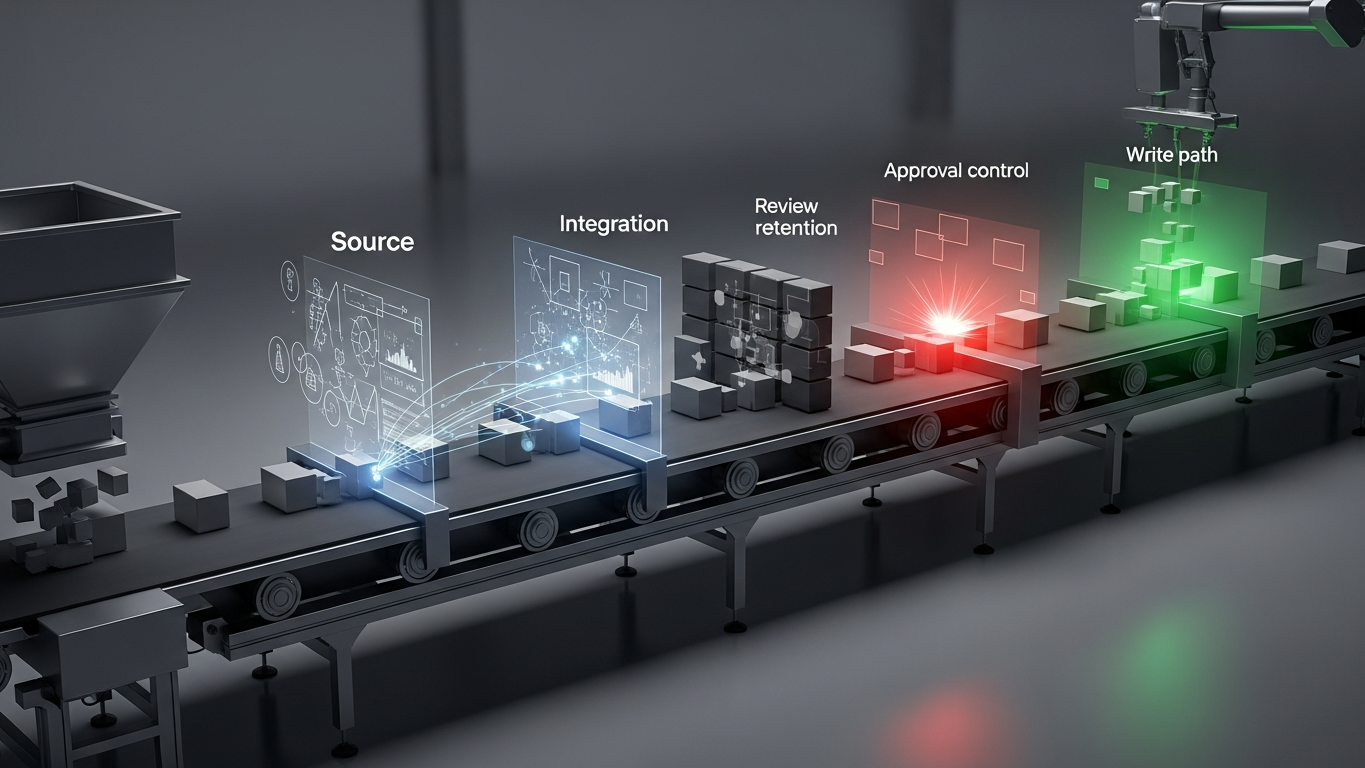
Manufacturing AI traceability should include immutable timestamps, user and system identities, input artifacts and redaction rules, model and configuration version, prompt and retrieval context where used, generated outputs, human approval records, and any downstream API calls or writes to factory systems. If you cannot rebuild that chain for a single incident, traceability is incomplete—and incomplete traceability turns every serious question into a narrative fight.
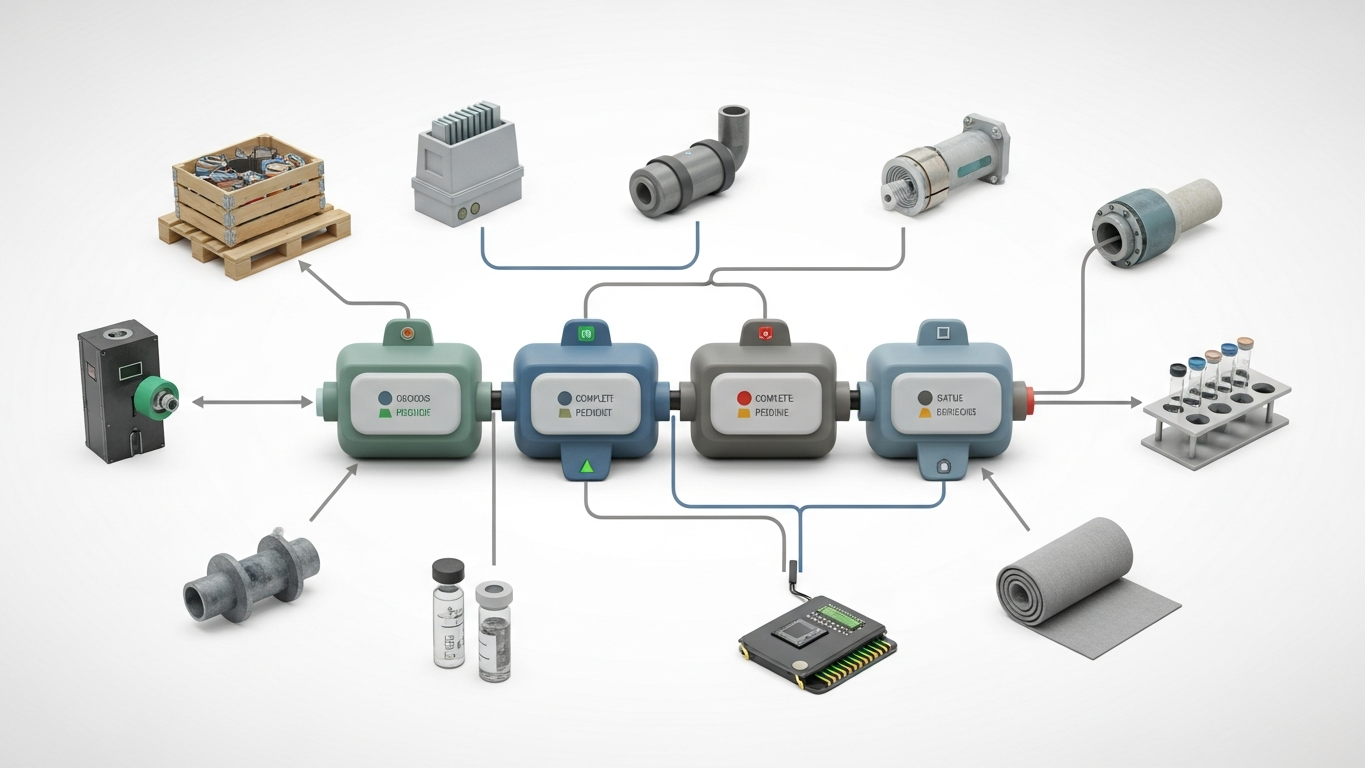
Why traceability is a manufacturing requirement
Factories face customer quality disputes, regulatory inquiries, internal root-cause analysis, and supplier accountability questions. Generic chat logs rarely satisfy those needs because they capture conversation, not causality. Industrial traceability is about the decision chain: what inputs shaped the recommendation, what version of the system produced it, who approved it, and what happened next.
Minimum record set: what “good” includes
Every meaningful step needs a stable event ID and a synchronized time source. Capture humans and service accounts separately, with service accounts mapped to owning teams. Store references to inputs—not necessarily raw secrets—with redaction rules for drawings and cost sheets. Record which model build, feature flags, and retrieval indexes were active. For retrieval-augmented setups, log what context was retrieved, with hashes where storage is sensitive. Store the output as delivered, not only a summary. If outputs are approved, rejected, or edited, store who decided and what changed. If APIs write to MES, QMS, or ticketing, log transaction identifiers and payloads at an appropriate detail level.
Chat transcript versus industrial trace pack
A chat transcript shows conversation. An industrial trace pack shows causality. Buyers should insist on the second class for production workflows—because production workflows are where “we talked about it” is not an acceptable substitute for “we can prove it.”
How to validate traceability in a pilot
Run a tabletop exercise: pick a hypothetical quality escape and ask the vendor to demonstrate reconstruction from logs. Time how long it takes a neutral reviewer to follow the chain. If reconstruction requires vendor-only tools or manual heroics, flag it early—before the tool becomes embedded in daily operations.
Traceability should connect to retention policies, access reviews, export for SIEM, and legal hold procedures. Otherwise logs become write-only theater: comforting until someone actually needs them.
Traceability is not a narrative comfort; it is the minimum record set and reconstruction test you already outlined. Map Vector the same way you would map any historian or MES-adjacent service: deployment boundaries, client data excluded from training the shared model, industrial reasoning grounded in factory transformation knowledge, and evidence that supports the trace floor you expect from any system of record.
Traceability is how AI earns the right to sit beside consequential operations. Define it as data structures and processes, not as a vague promise to keep history.
Plant checkpoint
Treat “What Traceability Should Look Like in a Manufacturing AI System” as a decision tool, not background reading. Before the next steering meeting, ask for one artifact that proves your posture—an architecture diagram, a training-policy excerpt, a log sample, a signed workflow classification, or a promotion record. If the room can only tell stories, you are still in pilot clothing. Manufacturing AI matures when evidence becomes routine: the same discipline you already expect before a line release, a supplier change, or a major IT cutover. That is the shift from excitement to infrastructure—and it is what keeps programs coherent across audits, turnover, and multi-site expansion.
If leadership wants one crisp decision habit, make it this: name what must be true before usage expands, then review whether it is true on a fixed cadence. That is how governance stops being a narrative comfort and becomes an operating metric your plants can execute.
DBR77 Vector aligns with industrial adoption expectations where traceability, deployment boundaries, and governed decision support matter more than disposable chat history. Book a demo or Review security.