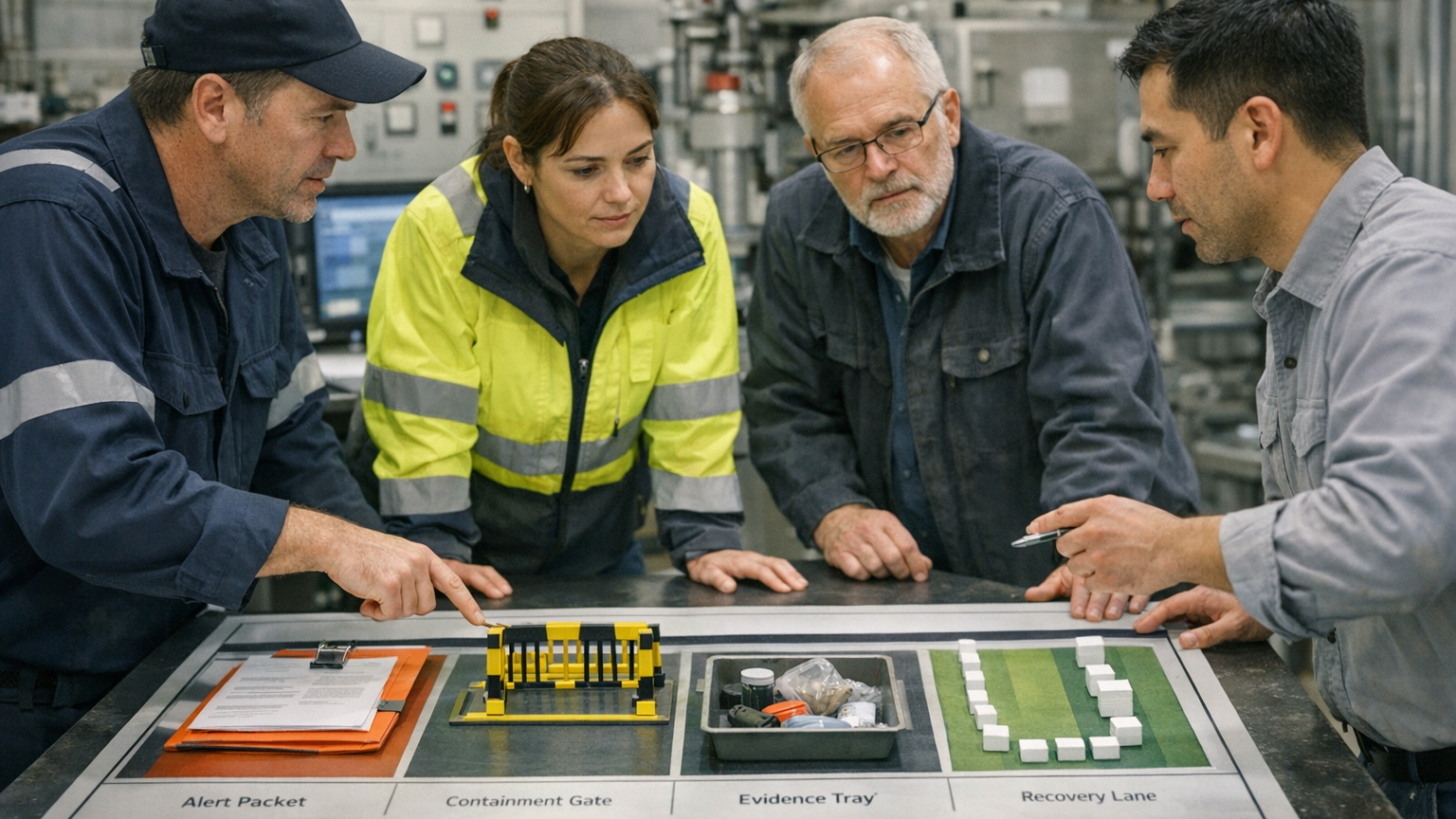
Core problem: generic IT incident playbooks omit model-specific failures such as data drift in prompts, poisoned context, or unsafe recommendations that nearly reached execution
Main promise: a manufacturing AI IR model adds detection categories, escalation paths, containment steps, vendor duties, and evidence preservation tuned to inference pipelines and factory integrations
Industrial incidents are not only credential theft. They include wrong decisions at the edge of automation—moments where a model output almost became action, where context was poisoned, or where an integration path behaved in a way operations did not expect. A generic IT playbook that stops at phishing and malware will miss the AI-shaped failures that manufacturing teams actually fear.
An industrial AI incident response model should include severity tiers for confidentiality, integrity, and availability impacts; detection signals across logs, model outputs, and integration errors; containment steps that can disable actuation paths while preserving evidence; vendor notification and cooperation clauses; roles for operations, quality, and safety; communication templates for customers and regulators where applicable; and post-incident reviews that update deployment boundaries and training allowances. If the playbook ignores recommendations that influence production, it is incomplete.
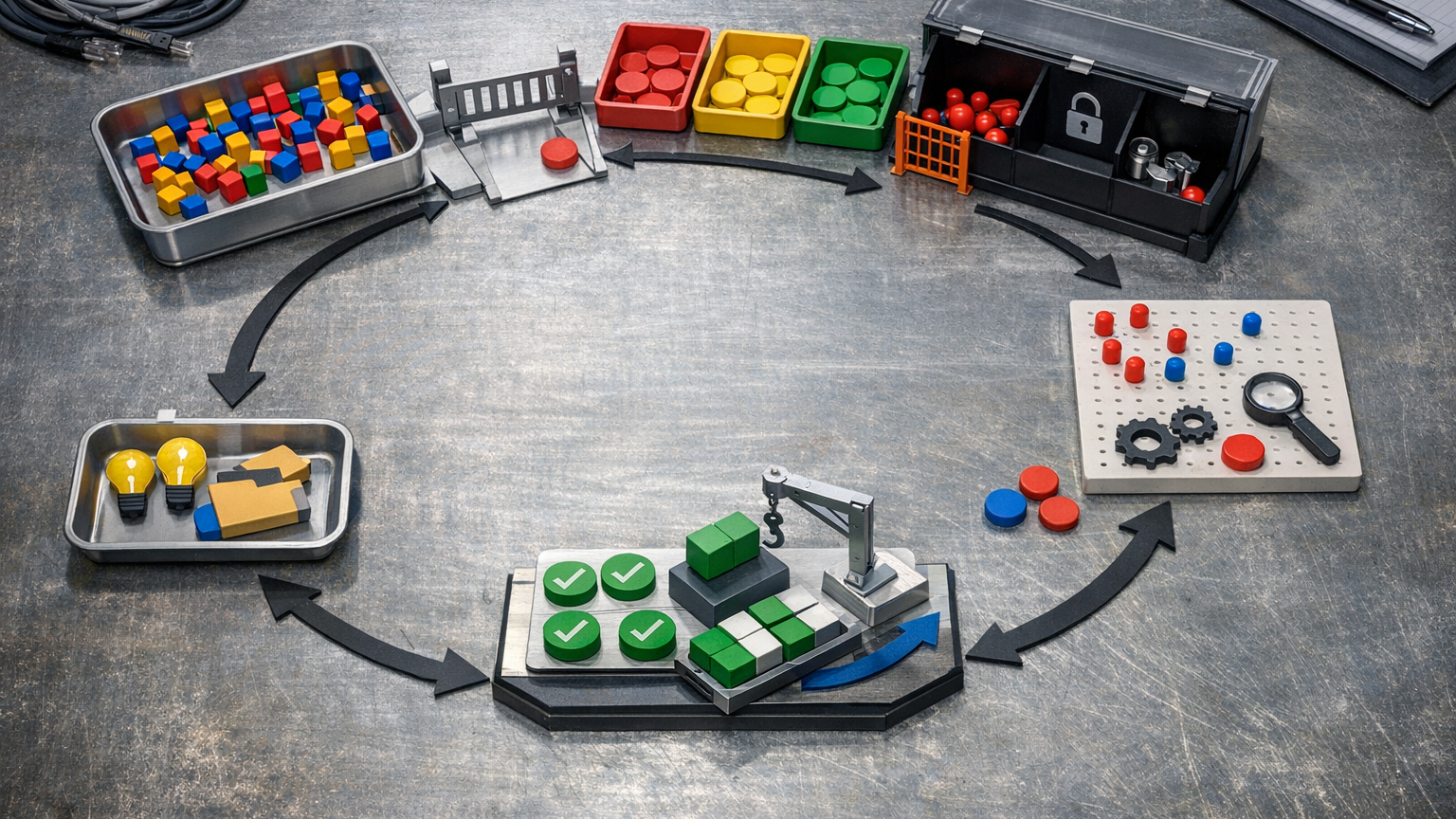
Five incident categories factories should plan for
Data exposure: unintended egress of classified plant data through AI tooling or support access. Model behavior integrity: systematic unsafe or incorrect recommendations after a change window. Integration abuse: unexpected reads or writes to MES, QMS, or historian paths. Account and key compromise: stolen API keys or admin sessions with AI admin planes. Supply chain issues: vulnerable dependencies or subprocessor breaches affecting the AI runtime.
Response phases that stay practical under pressure
Triage quickly: classify impact on people, environment, product, customer obligations, and regulatory triggers. Contain with least production damage: disable high-risk workflows first while keeping logging streams running for forensic reconstruction. Preserve evidence: snapshot configs, model versions, prompt templates, and correlation identifiers; chain of custody matters for insurers and auditors. Invoke the vendor loop using contractual cooperation windows; request subprocessor statements when relevant. Recover and harden: re-enable with additional approval gates or narrower data scopes. Learn: update risk tiers, procurement annex language, and workforce allowed-use guidance.
Minimum playbook contents: named incident commander rotation; a decision tree for when to pull human approval globally; a map of actuation-capable integrations; customer and business communication owners; a regulatory notification matrix by region.
Tabletop exercises fail when scenarios stop at phishing and never include a bad batch of recommendations that almost released to the line. Add one AI-specific tabletop per year—because rehearsal is how plants turn panic into procedure.
Factory incident playbooks gain a model dimension: wrong outputs, poisoned context, and silent behavior drift need the same severity routing as credential abuse. Assume Vector sits beside plant data planes with deployment boundaries and client data excluded from training the shared model, proprietary industrial reasoning oriented to manufacturing decisions rather than generic chat, and logging that your IR phases can consume when containment and reconstruction matter.
Industrial AI incident response is IT plus operations plus model behavior. Build the playbook before the first serious alert—and practice with scenarios that include almost-wrong outputs, not only stolen passwords.
Plant checkpoint
Treat “What an Industrial AI Incident Response Model Should Include” as a decision tool, not background reading. Before the next steering meeting, ask for one artifact that proves your posture—an architecture diagram, a training-policy excerpt, a log sample, a signed workflow classification, or a promotion record. If the room can only tell stories, you are still in pilot clothing. Manufacturing AI matures when evidence becomes routine: the same discipline you already expect before a line release, a supplier change, or a major IT cutover. That is the shift from excitement to infrastructure—and it is what keeps programs coherent across audits, turnover, and multi-site expansion.
If leadership wants one crisp decision habit, make it this: name what must be true before usage expands, then review whether it is true on a fixed cadence. That is how governance stops being a narrative comfort and becomes an operating metric your plants can execute.

DBR77 Vector fits IR planning for industrial AI stacks with clear deployment separation, no client-data training, and manufacturing-oriented reasoning surfaces to monitor. Explore products using Vector or Review security.