
Core problem: rollouts stall or get blocked when architecture decisions are deferred to after the contract, leaving data paths and approval models undefined
Main promise: a focused architecture review produces signed decisions on boundaries, identity, logging, training policy, and integration contracts before production traffic
A private AI rollout is not a model selection exercise. It is an integration and control-plane decision. The cost of deferring architecture is not “more meetings.” It is unpaid risk: payloads moving before boundaries are real, approvals existing only as intent, and operations discovering the truth under pressure.
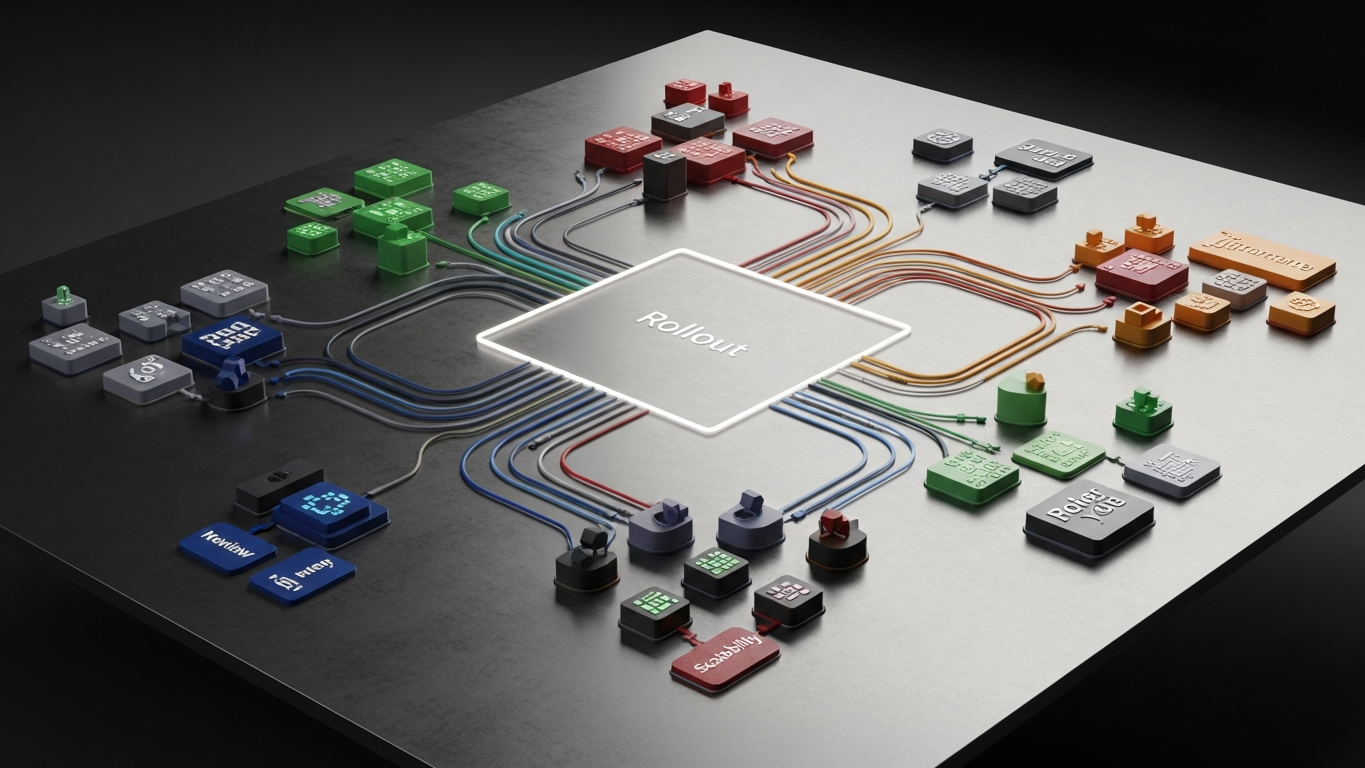
A private AI architecture review should decide deployment topology, identity and segmentation, data residency and egress rules, training and fine-tuning boundaries, logging and retention for reconstructability, human approval placement, subprocessors, and factory system interface contracts. Capture each item as a written decision with an owner, not as a slide aspiration. Unsigned architecture is unpaid risk—and manufacturing programs pay that bill eventually.

Decision register: what must be signed
Deployment topology: choose among on-premise runtime, dedicated private API, isolated tenant, or hybrid; document where inference executes and where admin consoles live. Identity and access: map roles such as operator, engineer, integrator, and vendor support; define break-glass and time-bound elevation. Data residency and egress: list allowed regions and prohibited flows, including backup and observability paths. Training policy boundary: state whether client payloads can train, tune, or populate evaluation sets; reference contract clause identifiers. Logging and retention: define what is logged per request, correlation identifiers, and retention aligned to investigations. Human approval placement: specify which output classes require named approvers and service-level expectations. Subprocessors and change control: list approved subprocessors and notice windows for changes. Factory interface contracts: for each MES, QMS, or data lake touchpoint, document read versus write, rate limits, and rollback. Incident and DR alignment: align AI runtime recovery with plant IT runbooks.
The review is complete when a single-line architecture diagram is approved, data classes are mapped to storage and transit protections, a test proves log reconstruction for a sample recommendation, and procurement holds matching contractual language. Pause rollout when vendor documentation contradicts the diagram, or when support access can reach production data without a ticketed trail.
Your nine-decision register should close with signatures only after each line item maps to a named environment, route, and owner—not after a slide deck feels confident. Use the review to test Vector against plant reality: proprietary industrial AI with private and isolated deployment patterns, client data excluded from model training, and reasoning aligned to manufacturing transformation rather than generic chat—so rollout choices stay reversible before production coupling hardens.
Architecture reviews exist to remove ambiguity before money and data move. Decide boundaries early. Roll out with fewer surprises.
If a decision cannot be written down, it is not a decision yet—it is a hope. Hopes are expensive in production environments.
Plant checkpoint
Treat “What a Private AI Architecture Review Should Decide Before Rollout” as a decision tool, not background reading. Before the next steering meeting, ask for one artifact that proves your posture—an architecture diagram, a training-policy excerpt, a log sample, a signed workflow classification, or a promotion record. If the room can only tell stories, you are still in pilot clothing. Manufacturing AI matures when evidence becomes routine: the same discipline you already expect before a line release, a supplier change, or a major IT cutover. That is the shift from excitement to infrastructure—and it is what keeps programs coherent across audits, turnover, and multi-site expansion. Finally, treat ambiguity as debt: every unanswered question about data paths, training defaults, or approval routing is something your future self will pay for under time pressure—usually during an audit, an incident, or a rushed rollout.
If leadership wants one crisp decision habit, make it this: name what must be true before usage expands, then review whether it is true on a fixed cadence. That is how governance stops being a narrative comfort and becomes an operating metric your plants can execute.
DBR77 Vector supports architecture conversations with clear deployment modes, training posture, and industrial reasoning aligned to signed boundary decisions. Book a demo or Review security.