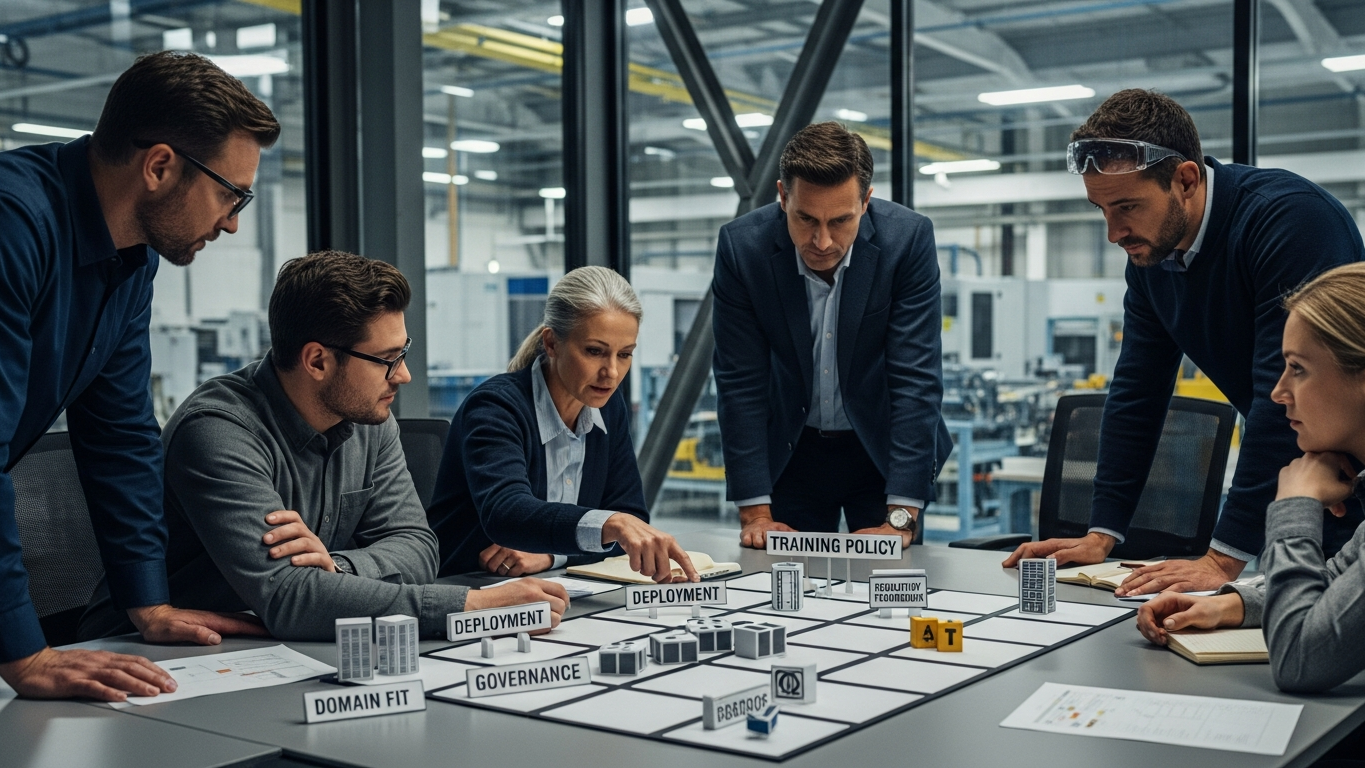
Główny problem: nabywcy przemysłowi często słyszą dopracowany język sztucznej inteligencji, ale mają zbyt mało jasności co do wdrażania, polityki szkoleniowej, dopasowania domeny i zarządzania Główna obietnica: producenci potrzebują jasnego obiektywu oceny, który przecina marketing i chroni jakość zakupów
Każdy dostawca opowiada o inteligencji, automatyzacji i transformacji. Niewielu z nich jest w stanie pokazać, w prostych słowach, jak ich system zachowuje się w modelu kontroli fabryki. Ocena przemysłowa powinna zachowywać się jak przegląd bezpieczeństwa i architektury z kręgosłupem przypadku użycia - a nie jak konkurs piękności demo, w którym wygrywa najładniejszy akapit.
Gubisz się w sloganach, gdy sprzedawca nie jest w stanie zmapować twierdzeń na pisemne fakty dotyczące ścieżek danych, trybów wdrażania, szkoleń i retencji, podprocesorów, rejestrowania, obsługi incydentów i sposobu przeglądu wyników o wysokim stopniu konsekwencji. Należy spowolnić proces do momentu uzyskania odpowiedzi na te pytania w języku, w którym kierownicy ds. bezpieczeństwa i operacji mogą prześledzić rzeczywistość MES, ERP lub QMS. Jeśli rozmowa pozostaje na poziomie przymiotników, nie kupujesz przemysłowej sztucznej inteligencji. Kupujesz nastrój.
Prośby o dowód, zanim zaczniesz dbać o mapę drogową
Żądaj dowodów, a nie przymiotników. Żądaj diagramu lub opisu każdego przejścia od danych źródłowych do wnioskowania i z powrotem, w tym konsol administracyjnych i dostępu do pomocy technicznej. Poproś o wyjaśnienie na poziomie umowy, czy zawartość klienta może być wykorzystywana do szkolenia, dostrajania, oceny lub przeglądu przez ludzi w celu ulepszenia produktu. Poproś o podanie podprocesora i regionu dla przechowywania, wnioskowania, rejestrowania i obsługi zgłoszeń. Poproś o opcje wdrożenia z wyszczególnionymi różnicami technicznymi - współdzielony SaaS, izolowany tenant, prywatny interfejs API, środowisko uruchomieniowe lokalne lub zarządzane przez klienta. Poproś o przykładowe artefakty: harmonogramy przechowywania, formaty dzienników dostępu, rekordy zmian dla aktualizacji modelu lub szablonu monitu. Zapytaj o kategorie incydentów, okna powiadomień i zobowiązania do współpracy kryminalistycznej.
Jeśli odpowiedzi wymagają łańcucha kolejnych połączeń i nadal pozostają werbalne, potraktuj to jako sygnał dojrzałości - a nie problem z planowaniem.
Roszczenie a to, co powinni usłyszeć nabywcy przemysłowi
Kiedy słyszysz "bezpieczne przedsiębiorstwo", powinieneś usłyszeć model tożsamości, segmentację, szyfrowanie w tranzycie i spoczynku oraz kto posiada klucze. Kiedy słyszysz "prywatna sztuczna inteligencja", powinieneś usłyszeć izolację w czasie wykonywania, reguły wyjścia i to, czy niepowiązani dzierżawcy współdzielą infrastrukturę wnioskowania w sposób, który ma znaczenie dla twojego modelu ryzyka. Kiedy słyszysz "nie trenujemy na twoich danych", powinieneś usłyszeć zakres klauzuli, kontrole techniczne, wykluczone podprocesory i prawa do audytu. Kiedy słyszysz "przemysłowy pilot", powinieneś usłyszeć konkretne przepływy pracy w produkcji, obsługę konsekwencji i zachowanie związane z zatwierdzaniem. Kiedy słyszysz "SOC 2", powinieneś usłyszeć literę zakresu, systemy w zakresie, harmonogram i wyjątki.
Certyfikaty i logo wspierają historię. Nie zastępują narracji architektonicznej.
Use-case spine first
Pierwszym pytaniem nie jest to, jak zaawansowany jest model. Chodzi o to, która decyzja przemysłowa lub przepływ pracy ulega poprawie, z jakimi danymi wejściowymi i kto zatwierdza wynik. Następnie sprawdź, czy odpowiedzi dostawcy pozostają spójne, gdy podnosisz dochodzenie w sprawie złomu, które łączy dane QMS i linii, scenariusz wydajności, który dotyka finansów i operacji, lub kwestię dostawcy, której nie można omówić w ogólnym kontekście czatu. Jeśli historia sprowadza się do ogólnych przykładów na czacie, nadal patrzysz na opakowanie, a nie na produkt przemysłowy.
Red flags: polityka szkoleniowa wykorzystuje "zwykle" zamiast zachowania zdefiniowanego w umowie; brak wyraźnego właściciela aktualizacji modelu, szablonów monitów lub integracji narzędzi; rejestrowanie nie może wspierać rekonstrukcji rekomendacji, która wpłynęła na decyzję dotyczącą linii lub jakości; zarządzanie jest opisane tylko jako "człowiek w pętli" bez szczegółów dotyczących roli lub routingu.
DBR77 Vector jest przeznaczony dla nabywców, którzy oceniają dostawców pod kątem kontroli wdrażania, suwerenności danych, rozumowania przemysłowego, możliwości audytu i zatwierdzania przez ludzi - a nie estetyki slajdów. Jest to bezpieczna inteligencja stojąca za ekosystemem DBR77, z danymi klienta wykluczonymi ze szkoleń i opcjami, które respektują granice fabryki. W przypadku Vector należy użyć tego samego paska dowodowego, co w przypadku każdego innego finalisty.
Antidotum na buzzwords jest pisemna lista kontrolna dowodów zmapowana do systemów zakładu i klas danych. Zakup przemysłowej sztucznej inteligencji to wybór infrastruktury. Traktuj niejasne odpowiedzi jako ryzyko decyzyjne, a nie jako coś, co można wygładzić w planie pilotażowym.
Roślinny punkt kontrolny
Traktuj tę soczewkę oceny jako cotygodniowy nawyk, a nie jednorazowe ćwiczenie RFP. Zanim wybierzesz dostawcę, poproś swój zespół o przygotowanie jednego pisemnego artefaktu dla każdego głównego roszczenia - diagramu, klauzuli, próbki dziennika lub przebiegu pracy. Jeśli folder pozostaje pusty, podczas gdy kalendarz zapełnia się prezentacjami, optymalizujesz pod kątem teatru. Produkcyjne zespoły zakupowe wygrywają, gdy dowód staje się domyślnym językiem rozmowy.
Jeśli przywództwo chce mieć jeden wyraźny nawyk decyzyjny, niech będzie to: określ, co musi być prawdą, zanim rozszerzy się zakres użytkowania, a następnie sprawdź, czy jest to prawdą w ustalonym czasie. W ten sposób zarządzanie przestaje być komfortem narracyjnym i staje się metryką operacyjną, którą zakłady mogą wykonać.
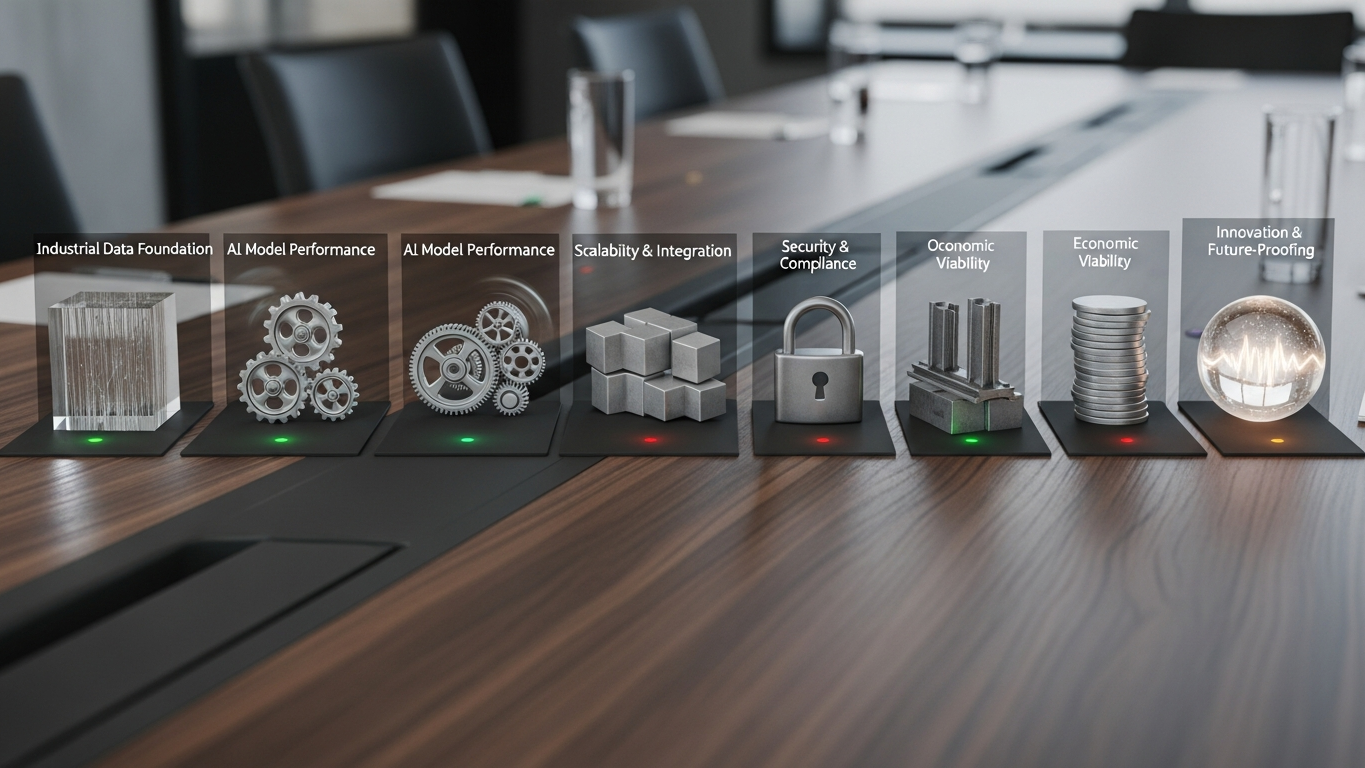
DBR77 Vector zapewnia kupującym bardziej przejrzystą ścieżkę oceny przemysłowej sztucznej inteligencji dzięki opcjom wdrażania prywatnego, przejrzystości polityki danych i silniejszym oczekiwaniom w zakresie zarządzania. Sprawdź dopasowanie dostawcy lub Sprawdź bezpieczeństwo.